
Why Snow Is Good for Your Garden: Winter Insulation Benefits Explained
When we look out at the farm covered in a heavy layer of white, it’s easy to shiver. The landscape looks frozen and harsh. But to a gardener’s eye, a good snowfall is actually a gift.
Here at Breemar Flower Farm in central Virginia, while we’re inside staying warm, that soft white blanket is quietly at work outdoors—protecting the soil and performing vital tasks that help our cut flowers and perennial plants thrive come spring.
Snow may slow us down, but for the garden, it plays an important role.
Snow Is a Surprisingly Good Insulator
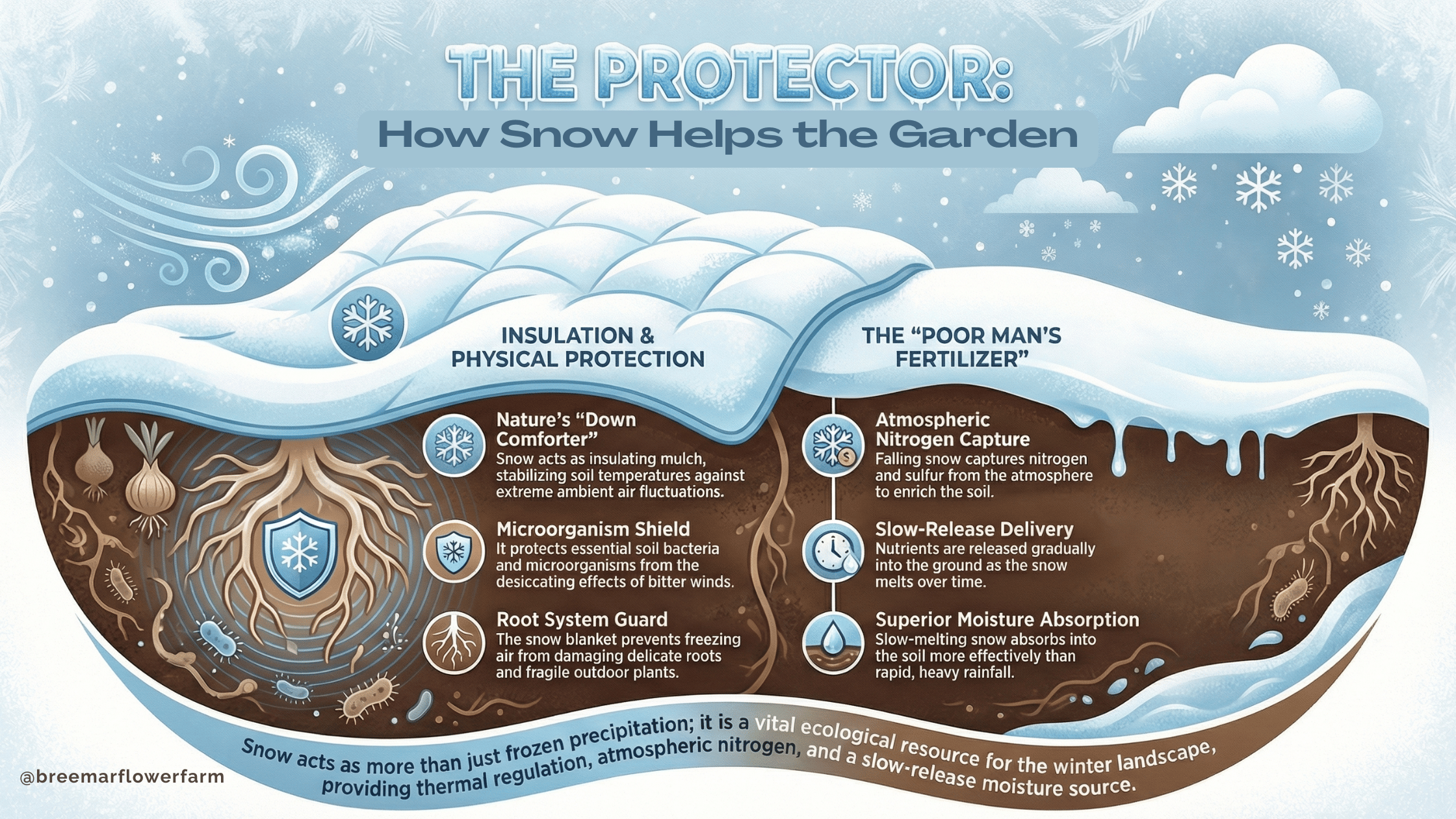
It seems counterintuitive to think of frozen water as a way to keep things warm, but snow acts as a phenomenal insulator. Think of it less like ice and more like a down comforter draped across the landscape.
Snow functions as an insulating mulch for the soil. Just as we wear layers to trap heat, snow covers the earth and protects plant roots, beneficial bacteria, and microorganisms from biting wind and extreme cold. Without this protective layer, fluctuating winter temperatures can cause far more damage. Under snow cover, soil temperatures remain more stable, reducing stress on roots and helping plants survive winter dormancy.
Snow Protects Plants From Winter Wind and Freeze Damage
Winter wind can be just as damaging as cold temperatures. Exposed soil and plant crowns are more vulnerable to drying out, heaving, and freeze-thaw cycles that can damage roots.
A layer of snow shields the garden from those harsh conditions. By blocking wind and buffering temperature swings, snow helps prevent plants from freezing and thawing too rapidly—one of the most common causes of winter plant loss in our region.
Snow Provides Slow, Gentle Moisture
Unlike heavy winter rain, snow melts gradually. This slow release of moisture allows water to soak into the soil rather than running off compacted or frozen ground.
As snow melts, it delivers hydration exactly where plants need it most—at the root zone—helping replenish soil moisture ahead of spring growth without causing erosion or oversaturation.
Snow Even Adds a Small Nutrient Boost
Snow isn’t just frozen water. As it falls, it captures trace amounts of atmospheric nitrogen and other particles. When it melts, those nutrients are released into the soil in small, natural doses.
While snow isn’t a fertilizer replacement, it does contribute to overall soil health—especially when combined with organic matter and good soil structure.
A Quiet Reminder From the Garden
If a big snowstorm is headed your way, it’s natural to worry. But snow is not something to fear in the winter garden. It’s protection, insulation, and nourishment all wrapped into one quiet, seasonal pause.
At Breemar Flower Farm, winter is a season of trust—trust in the soil, in the plants, and in the natural rhythms that have guided gardens long before us. Beneath the snow, the garden is resting, protected, and preparing for what comes next.
Spring will come.
And your garden will be ready.
Keep Blooming,
Nicole Dillon
Breemar Flower Farm
