
How Many Flowers Do I Actually Need To DIY My Wedding?
If you're planning to DIY any part of your wedding flowers, one of the first questions you'll run into is: how many stems do I actually need? Here's the real breakdown, straight from years of building bouquets and centerpieces for Richmond brides.
Building a DIY Bridal Bouquet
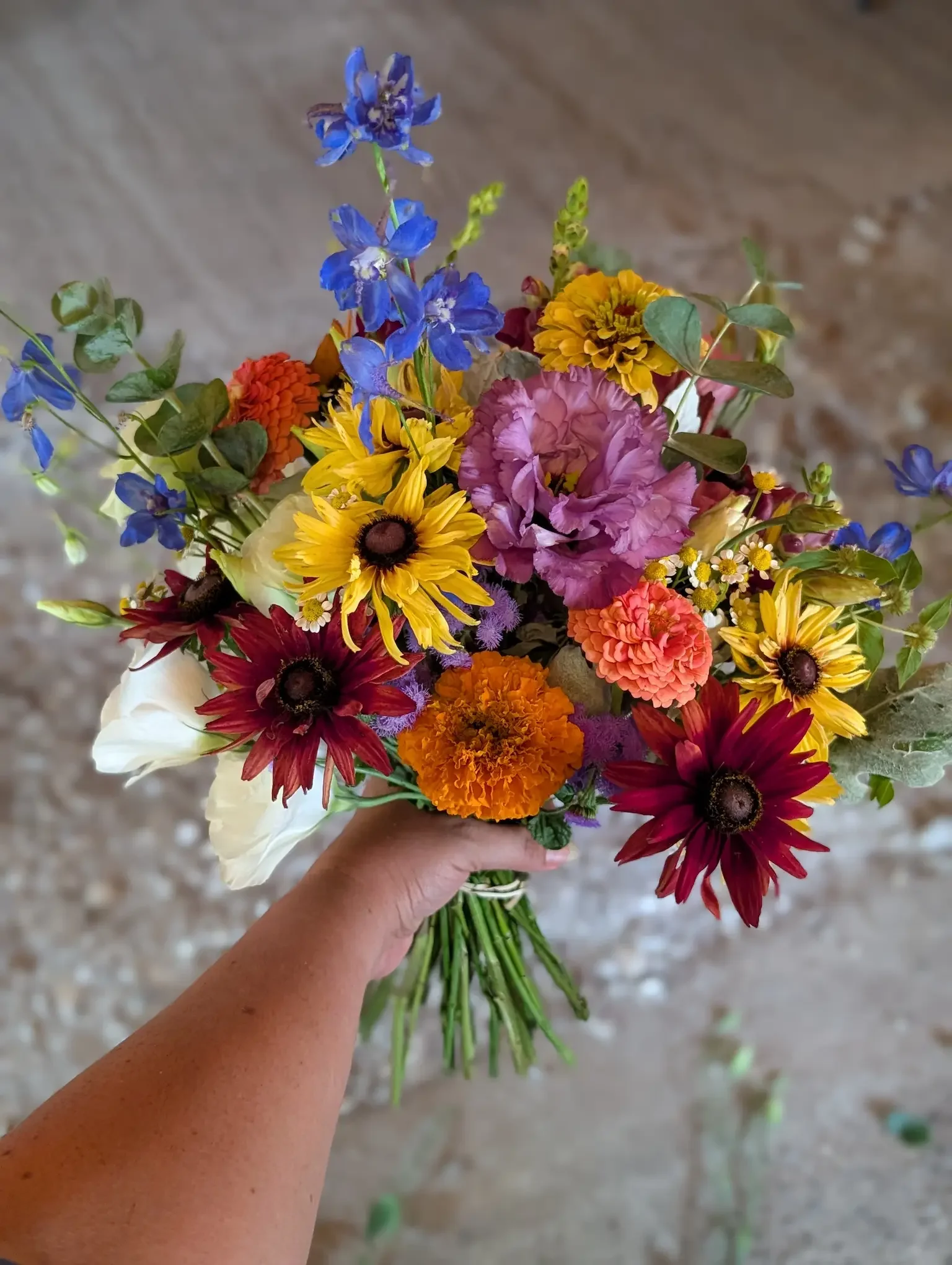
For a full, lush, statement bridal bouquet, you're looking at 25 to 35 stems total. Within that count, you want a mix of different elements so the bouquet feels layered and interesting, like it grew that way naturally in a garden. At Breemar, that mix breaks down into four categories:
Focal flowers (7-9 stems): the big, eye-catching statement blooms, think peonies, garden roses, dahlias in fall, or sunflowers. These are what draw the eye first.
Filler flowers (7-9 stems): smaller supporting blooms like ranunculus, zinnias, marigolds, or smaller dahlias that round out the design.
Line flowers (3-5 stems): taller, structural flowers like stock, snapdragons, delphinium, bells of Ireland, or even solidago and millet, which add height and movement.
Greenery (5+ stems): a generous amount of greenery ties the whole bouquet together and finishes the bottom of the bouquet nicely, especially since it's visible whether you're holding it up or down. If you'd rather skip greenery altogether, hydrangea makes a great substitute base and matrix to hold it all together (please don’t do this in the heat of the summer).
DIY Bridesmaid Bouquets and Boutonnieres
Bridesmaid bouquets should be a bit smaller, 18 to 24 stems. A general design tip that applies throughout: stick to odd numbers of stems (threes, fives, sevens) rather than even ones. Odd numbers naturally draw the eye and create a more pleasing arrangement, the one exception being a single, oversized statement bloom like a dinner-plate dahlia.
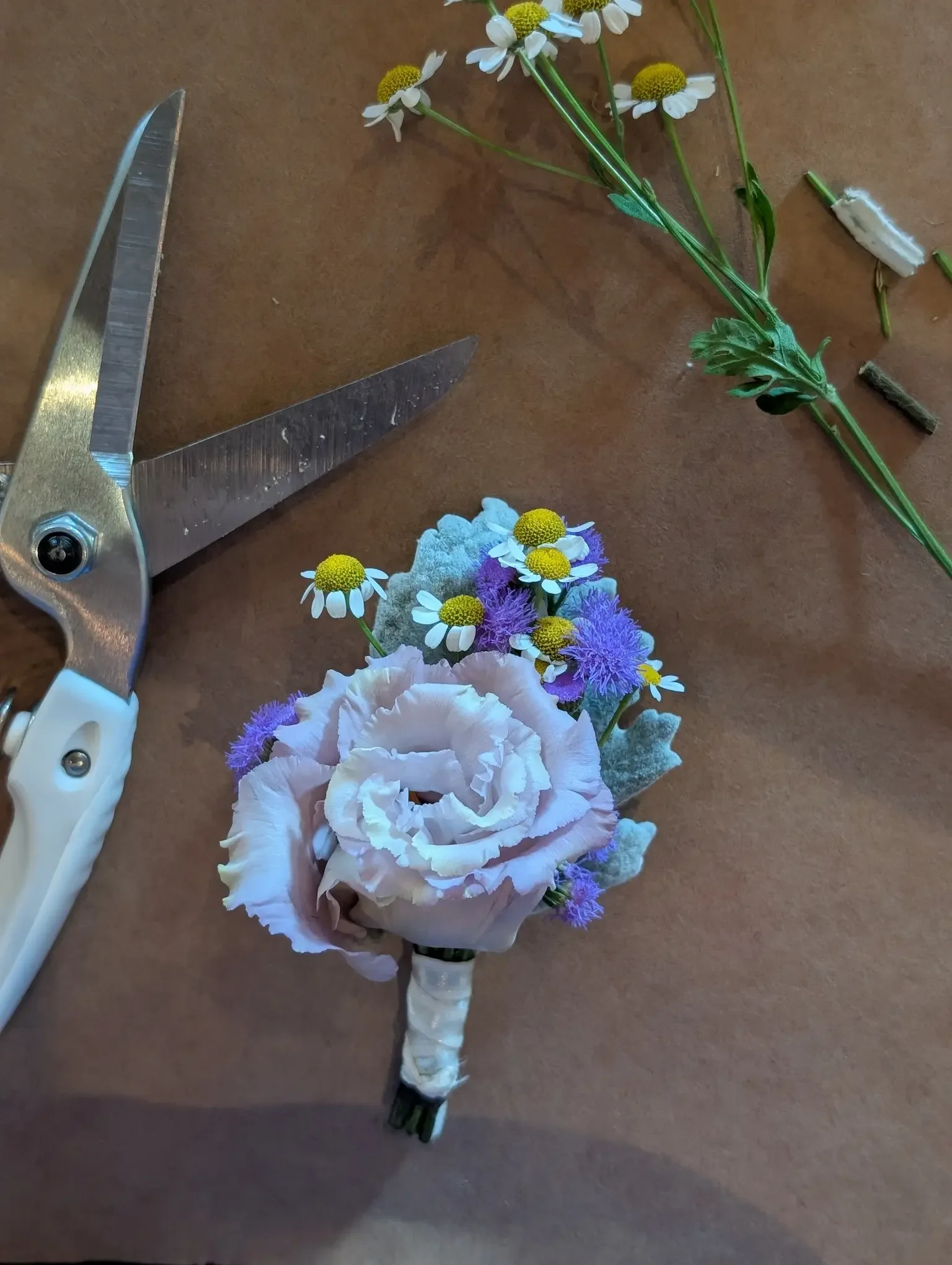
For boutonnieres, you can often repurpose leftover pieces from your other arrangements, but it’s a good idea to at a minimum account for the focal flower. Good boutonniere focal flowers are lisianthus (shown here), spray roses, small dahlias, strawflower, carnations. Avoid a large rose, as this will overpower the suit.
Centerpieces: It Depends on the Look
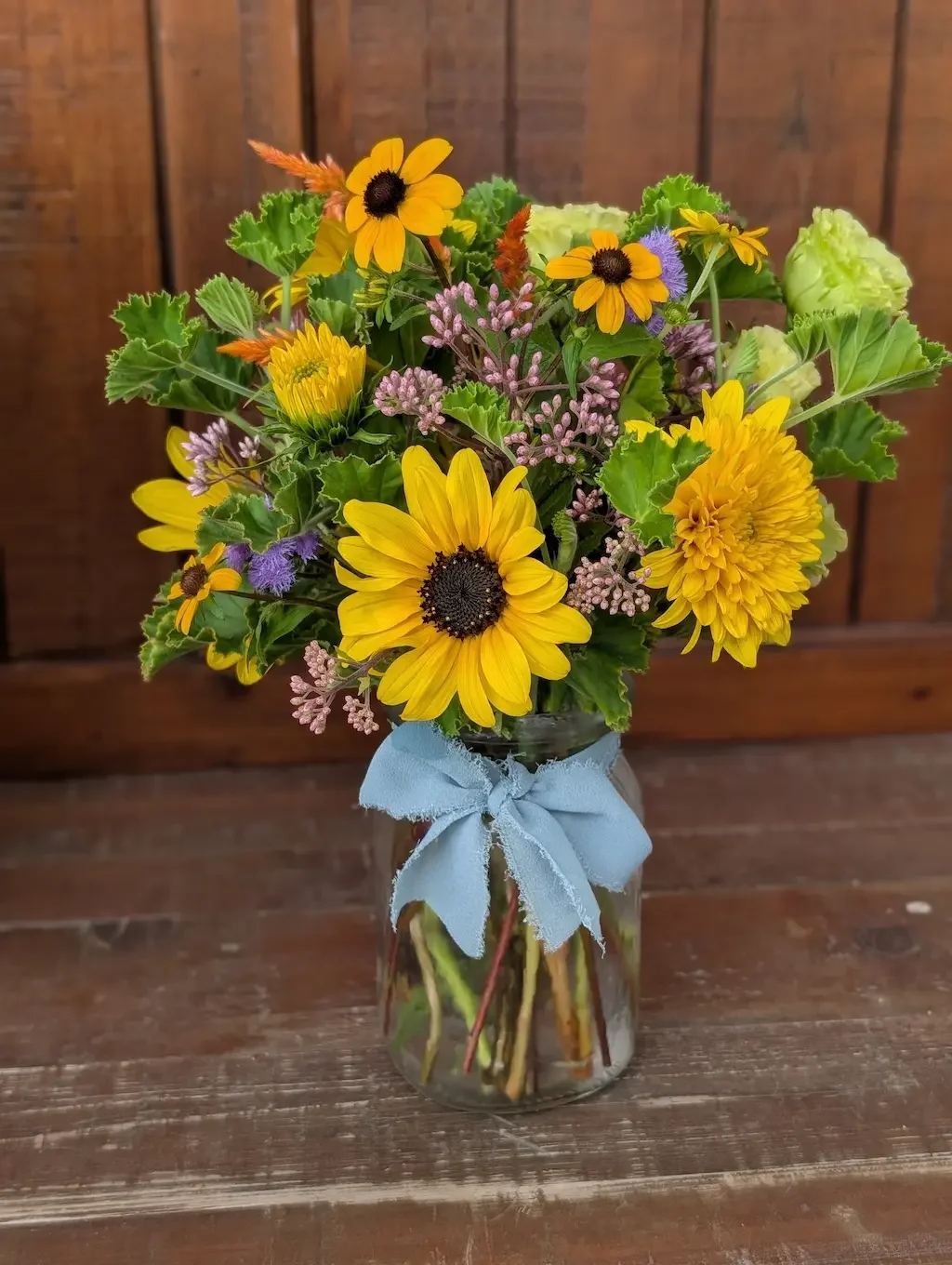
Centerpiece stem counts vary widely depending on your style:
Bud vases: the easiest DIY option. A single stem per vase is simplest, but a fuller look (one greenery piece, one line flower, one smaller focal flower per vase) looks noticeably nicer. For rectangular tables, plan on 3 bud vases per 4 guests. For round tables, plan on 5-7 bud vases minimum.
Small, low arrangements: 15-25 stems
Medium or standard centerpieces: 25-40 stems
Large compotes or long, low arrangements (great for rectangular tables): up to 50 stems. More stems than a standard centerpiece, and worth planning for accordingly
Large statement pieces (aisle meadows, altar décor, sweetheart table arrangements): 60+ stems
Don't Forget These Extras when You DIY Your Wedding Flowers
A few things brides often overlook when placing their flower order:
An extra boutonniere or two. I used to work as a wedding planner, and I always had my brides order at least one spare. Boutonnieres are delicate and can break before photos, or you might realize someone was accidentally left out. Better to have a backup than to have your planner scrambling to hand-assemble one from a bridesmaid's bouquet on the fly.
A small buffer of extra flowers. Not excessive, but enough to adjust an arrangement that turns out a bit larger than planned, or to repurpose for cake flowers.
Flowers for your caterer. Caterers love to dress up dessert tables and bars, but florists are rarely contracted to provide those flowers automatically. If you want your bar or dessert table styled too, make sure it's part of your order.
Flowers for your photographer. Photographers create stunning shots of all the details of your wedding as layflats. Rather than the photographer stealing from arrangements on your tables, why not just prepare them a sweet bundle to use instead?
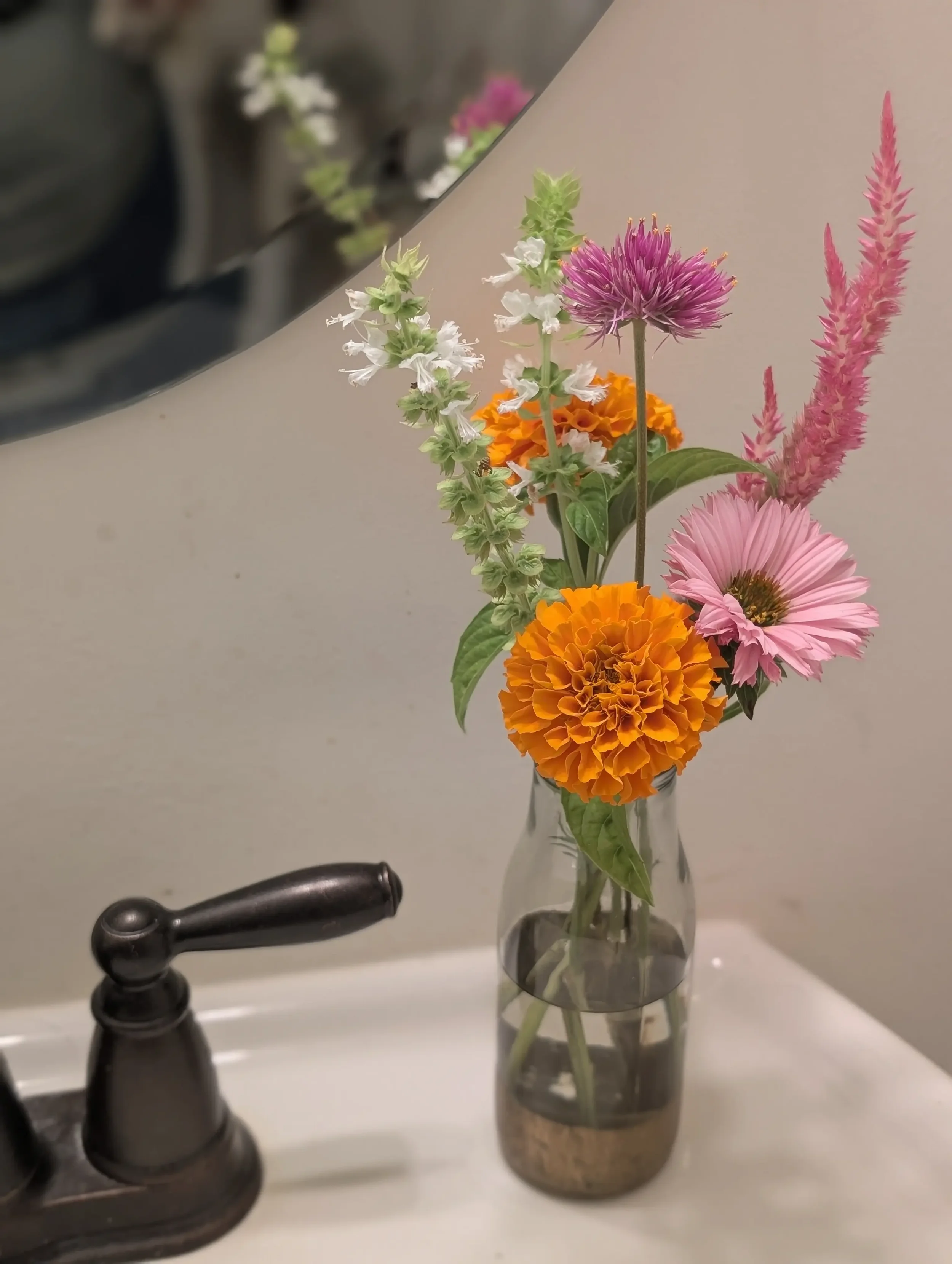
Place flowers in unexpected places. Nothing makes your trailer porta-potty feel cleaner and more elevated than a bud vase by the sink. These details make your day elevated and extraordinary.
DIY or Hybrid? How to Decide
Most of our brides go with a hybrid approach: they trust a professional for the pieces that matter most and get photographed most, bridal bouquet, bridesmaid bouquets, boutonnieres, and DIY the rest, like bud vases, themselves. It really comes down to budget and confidence: what can you afford to have professionally made, what are you comfortable doing yourself, and what matters most to the overall look of your day.
It's Also About How You Want to Spend Your Time
DIYing your wedding flowers is absolutely doable, but it's worth thinking honestly about how you want to spend the few days leading up to your wedding. Some brides love the experience of crafting alongside family and friends. Others would genuinely rather be at the spa. Neither choice is wrong, it's about what will make your day feel most special to you.
My Honest Advice if You Want to DIY Your Wedding Flowers but You're Feeling Overwhelmed
If all these numbers feel like a lot, my best advice is this: work with a consultant or farmer-florist who can take the guesswork out of it for you. At Breemar, our DIY Buckets of Blooms are curated specifically to make sense for your wedding, the right color palette, the right design elements, so they look professional even in your own hands.
If you're not confident in your design skills yet, consider taking an actual flower design course at Lewis Ginter Botanical Gardens or a private, in person, Petal Party with me rather than relying solely on YouTube tutorials or Instagram inspiration. Do a practice run (or two) well before the big day. And most importantly, work with someone who can help curate your flowers so you're not standing in a grocery store aisle trying to figure it all out alone. That's exactly what we're here for, and we believe in doing it in a way that's genuinely affordable.
Whether You Want Full-Service or DIY
Whether you want me to design every piece or just curate your DIY buckets, I'll help you figure out the right stem counts and the right approach for your wedding. Start with my Investment Guide & Calculator, then reach out through my inquiry form and let's plan it out together.
Keep Blooming, Nicole
