
What Flowers Are in Season for a Winter Wedding?
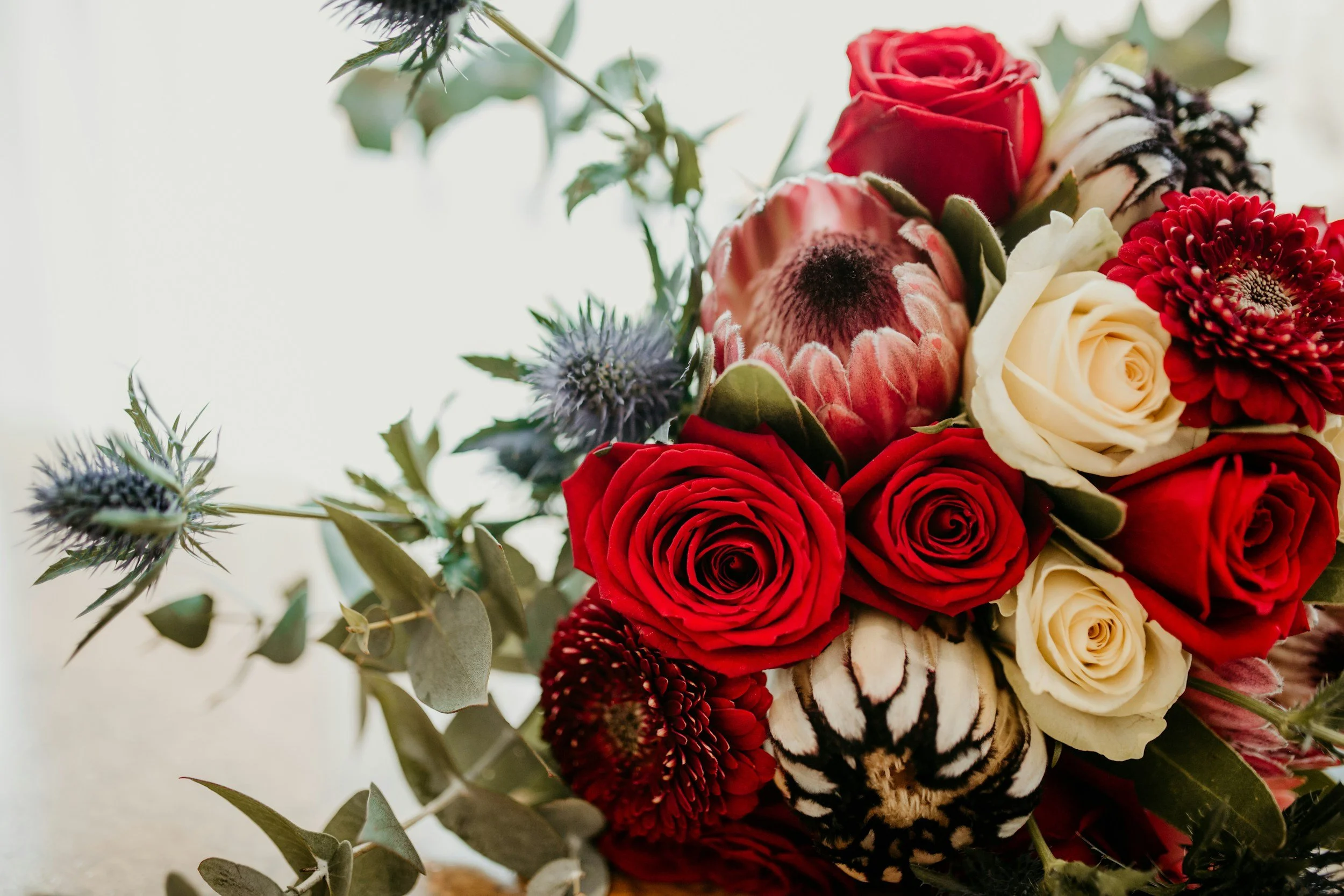
Winter weddings have a quiet beauty all their own, and the flowers can feel every bit as special as anything you'd find in June. If you're planning a December, January, or February wedding in the Richmond area, here's what's actually available, what I love working with most, and how to get a cozy, wintery look that doesn't read as Christmas.
Will a Winter Wedding Cost More?
Usually not. Unless you're set on a bloom that isn't in season, like peonies, sweet peas, orchids, or anthurium, a winter flower budget runs about the same as it would any other time of year. The cost climbs when specific out-of-season stems have to be shipped in or forced, which is one more reason I'd rather match your color palette than promise a particular flower. If you want to see how the numbers work, here's a look at real Richmond wedding flower pricing.
What's in Season in the Colder Months
Heirloom Chrysanthemums
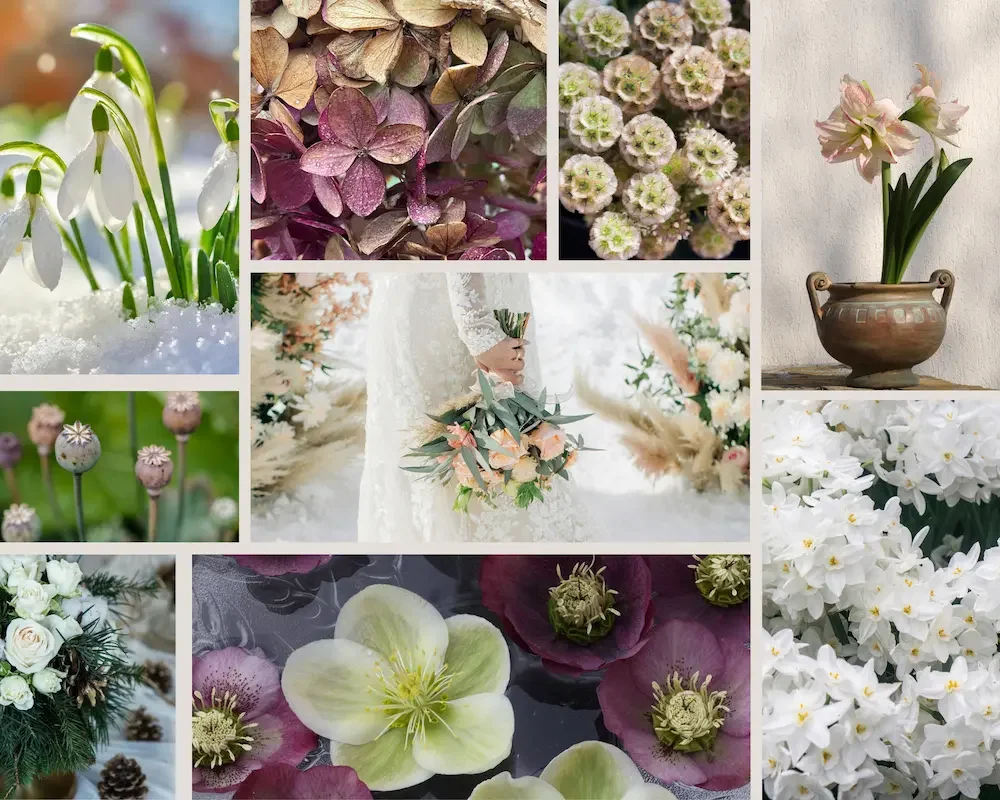
As fall rolls into winter, heirloom mums are some of the most beautiful flowers you can use. These are not the pot mums you see on porches. They come in vanilla, gold, soft pink, and peach, and they last a long time and hold up well out of water, which makes them wonderful for bouquets and boutonnieres. (If you're also curious about fall, here's what's in season for a fall wedding.)
Hellebore, Snowdrops, and Pansies
Some flowers bloom right through the cold. Hellebore is a lovely early-season choice, and snowdrops and pansies are blooms most people never think of for a wedding, but they can look beautiful in the right design.
Amaryllis, Tulips, and Paperwhites
On the farm, we force tulips, paperwhites, and amaryllis indoors during winter. Amaryllis is perfect for Christmastime weddings or January and February blooms. Flower farmers can also now grow tulips and amaryllis hydroponically, which means you can still have American-grown versions of these flowers instead of imports. If you're getting married in January or February, hydroponic tulips and other forced bulbs are what I'd look for.
Seed Heads and Pods
Winter is when texture takes the lead. We tend to rush through fall garden cleanup, but when we do, we miss the beauty of seed pods and seed heads, which are also important food for birds and shelter for solitary bees. If you walk through a meadow or the woods in winter, you'll see exactly the kind of structure and texture that makes a design feel unique. Lotus pods, poppy pods, and nigella seed heads are some of my favorites to bring into a bouquet.
Dried Flowers That Hold Their Color
Dried flowers are not to be missed in winter. Strawflower, celosia, and gomphrena keep their color beautifully, and ammobium is a dainty little flower that dries so well. One thing to know: white flowers are hard to dry, so plan on antiqued, creamy whites rather than bright ones. Plenty of rich fall colors are also available in October and November.
Greenery and Foraged Materials
Evergreens, eucalyptus, ivy, foraged branches, and berries bring a cozy, woodland feel to winter arrangements. If you have a farmer-florist, they can also gather and dry materials ahead of time and save them for your day.
Wintergreen Whisper: A Winter Palette Without the Christmas Look
You can absolutely have a winter wedding that doesn't feel like a holiday party. That's exactly why I created Wintergreen Whisper, my winter palette. It's built around pine greens, browns, whites, and silvers, with cones for texture, so it feels like winter without leaning on Christmas.
The secret is to lean into natural materials instead of seasonal symbols: seed heads, dried flowers, antiqued whites, and greenery that looks like it came from the woods. When I want to get creative, I sometimes add dehydrated fruit or even mushrooms to corsages and boutonnieres. I'd also steer away from tropical blooms in winter. They fight the season instead of celebrating it.
I love designing around what the season offers. Our farm runs year-round, even when the fields aren't in bloom, and when we need something we don't grow, we buy from other American growers. Flowers are blooming somewhere in the United States 365 days a year, so you'll likely be pleasantly surprised by what's available.
If You Have Your Heart Set on an Out-of-Season Flower
If you're dreaming of something like peonies in January, you have options:
Use it in the bridal bouquet only. Save the splurge flower for the piece that gets photographed most and use seasonal blooms everywhere else.
Choose a lookalike. A garden rose is a beautiful stand-in for a peony.
Trust your florist with your color palette. Matching your colors almost always works better than chasing one specific flower.
Mix in a silk stem. I recently used a single silk orchid with locally grown amaranth and other fresh blooms because real orchids were out of budget, and you couldn't tell the difference, especially in photos.
Booking early helps too. When I know what you're planning, I can pull and dry materials ahead of time. For more on timing, see how far in advance to book your wedding florist.
Caring for Winter Flowers
Cold weather is easier on flowers than you might think. Just don't leave your flowers in a freezing car after you pick them up. Flowers can be held in a cooler at close to freezing temperatures, so they're not delicate. A warm, cozy home, hotel, or villa where you're designing is plenty for keeping them happy. And for outdoor ceremonies and photos, flowers are rarely out for long enough in the cold to be a problem.
Whether You Want Full-Service or DIY
From a hellebore-and-heirloom-mum bridal bouquet to a full DIY Bucket of winter blooms, I'll help you figure out what fits your winter wedding and your budget, whether that's à la carte, hybrid, or fully DIY. Start with my Investment Guide & Calculator, then reach out through my inquiry form and let's plan something beautiful for your season.
Keep Blooming, Nicole
